
How to Stop Having the Same Fight Over and Over
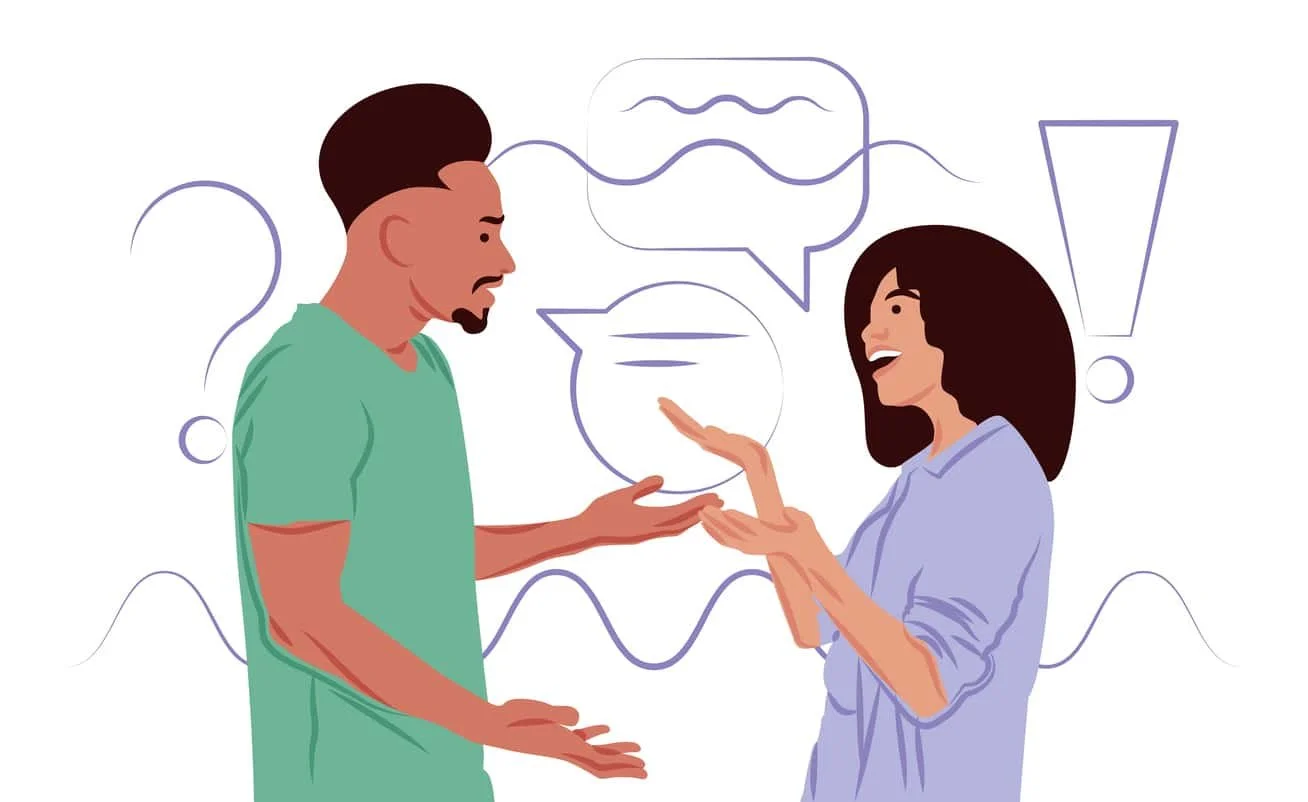
If you’re having the same fight again, you’re not crazy.
Most couples don’t have “a bunch of different fights.” They have one or two core fights that wear different outfits.
It might sound like:
“You don’t listen.”
“You’re always on your phone.”
“I can’t count on you.”
“You’re too sensitive.”
“You’re too intense.”
“I’m doing everything.”
Different topic. Same feeling.
And here’s the key: The fight isn’t the problem. The cycle is the problem.
Why the same fight keeps happening
Because the argument is rarely about the surface issue (money, chores, sex, parenting, schedules).
The surface issue is just the doorway.
Underneath it is usually something like:
“I don’t feel important to you.”
“I don’t feel safe bringing things up.”
“I feel alone in this relationship.”
“I don’t feel respected.”
“I feel like I can’t win.”
When those needs aren’t named directly, the relationship keeps trying to solve them through conflict.
Step 1: Find your cycle (not your villain)
Most couples get stuck in a predictable loop. Here are a few common ones:
Cycle A: The Pursuer / Withdrawer
One partner pushes for connection, change, answers.
The other shuts down, avoids, or goes quiet.
The more one pushes, the more the other pulls away.
Cycle B: Criticism / Defensiveness
One brings up an issue strongly (sometimes harshly).
The other hears it as “I’m failing” and defends.
Now, nobody is listening. Both are protecting.
Cycle C: Silent Resentment / Blow-Up
One partner stays quiet, tries to “be chill,” builds resentment.
Then it erupts out of nowhere.
The other feels blindsided and confused.
If you can name your cycle, you stop treating your partner as the enemy.
The enemy is the pattern.
Step 2: Identify the “trigger moment”
Most fights don’t start at the peak. They start at the first 30 seconds: the moment one person feels something shift.
Common trigger moments:
tone changes
a sigh / eye roll
a quick “never mind”
feeling dismissed
feeling criticized
feeling ignored
feeling controlled
Ask each other:
“What’s the first moment you feel yourself tense up?”
That’s where the real work is.
Step 3: Name the primary feeling (not the secondary reaction)
A lot of couples lead with anger because it feels strong and protective.
But anger is often covering:
hurt
fear
loneliness
shame
rejection
disappointment
Instead of:
“You don’t care.”
Try:
“When that happens, I feel overlooked and I start to panic that I’m not important.”
That’s not weakness. That’s clarity.
Step 4: Have a “pause plan” for the moment it starts
Most couples try to fix things after the argument explodes.
Better plan: interrupt the cycle earlier.
Pick a shared phrase that means “we’re slipping into the loop.”
Examples:
“We’re in it.”
“Same fight.”
“Pause—cycle.”
“Time out. Team.”
Then agree on the rules:
20 minutes to regulate (not punish)
come back at a specific time
one person talks, the other reflects back
stay on one topic
Important: A pause isn’t abandonment. It’s a reset so you don’t say things you can’t unsay.
Step 5: Use a structure that keeps you on the same team
Here’s a simple script that works.
Speaker:
“The story my brain tells is ____.”
“What I feel is ____.”
“What I need is ____.”
“My request is ____.”
Listener:
“What I’m hearing is ____.”
“That makes sense because ____.”
“What I want you to know is ____.”
This is not about being perfect. It’s about slowing the nervous system down enough for both people to stay present.
Step 6: Repair faster than you rupture
Every couple ruptures. The strong couples repair.
Simple repair lines:
“I got heated. I’m back.”
“I hear you. I didn’t want to.”
“Let’s restart that.”
“I’m sorry for my tone.”
“What I meant was…”
“Can we try again?”
Repairs aren’t weakness. They’re leadership in a relationship.
What to do if one of you shuts down
If you’re the partner who shuts down:
Your nervous system may be in freeze. You’re not being “cold.” You’re overwhelmed.
Try:
“I’m flooded. I want to talk, I just need 20 minutes.”
If you’re the partner who pursues:
Your nervous system may be in protest. You’re not being “too much.” You’re trying to reconnect.
Try:
“I’m feeling alone. Can you stay with me for a minute before we take a break?”
When couples therapy helps
If you’ve tried to fix this and you’re still stuck, therapy can help you:
identify your cycle quickly
understand what each person is protecting
build communication that doesn’t escalate
create trust and emotional safety again
Ready for support?
If you’re in California and you’re tired of having the same fight on repeat, I’d love to help. Reach out through the contact page to schedule a free consult or get started.